
Stop Active Leaks and Prevent Further Loss
Emergency Roofing Services in Potosi for immediate response when storms, fallen trees, or failed systems threaten your home's interior
Shinglers Roofing LLC provides emergency roofing services in Potosi for homeowners facing active leaks, storm damage, or sudden system failures that require immediate attention. You may have water dripping through a light fixture after a hailstorm, a tree branch that punctured shingles and sheathing, or wind-torn sections exposing the underlayment. The goal is to stabilize the situation, prevent further interior damage, and transition emergency fixes into long-term repair solutions.
Emergency response involves assessing the extent of the damage, installing tarps or temporary coverings to stop water entry, and securing loose materials that could blow off during the next weather event. In Potosi, where spring storms bring high winds and heavy rain, a quick response prevents ceiling collapse, insulation saturation, and electrical hazards. Once the roof is stabilized, the contractor evaluates whether permanent repairs can proceed immediately or if drying time and structural inspection are required first.
If you are dealing with an urgent roofing situation, call Shinglers Roofing LLC to arrange immediate service and protect your home from additional damage.
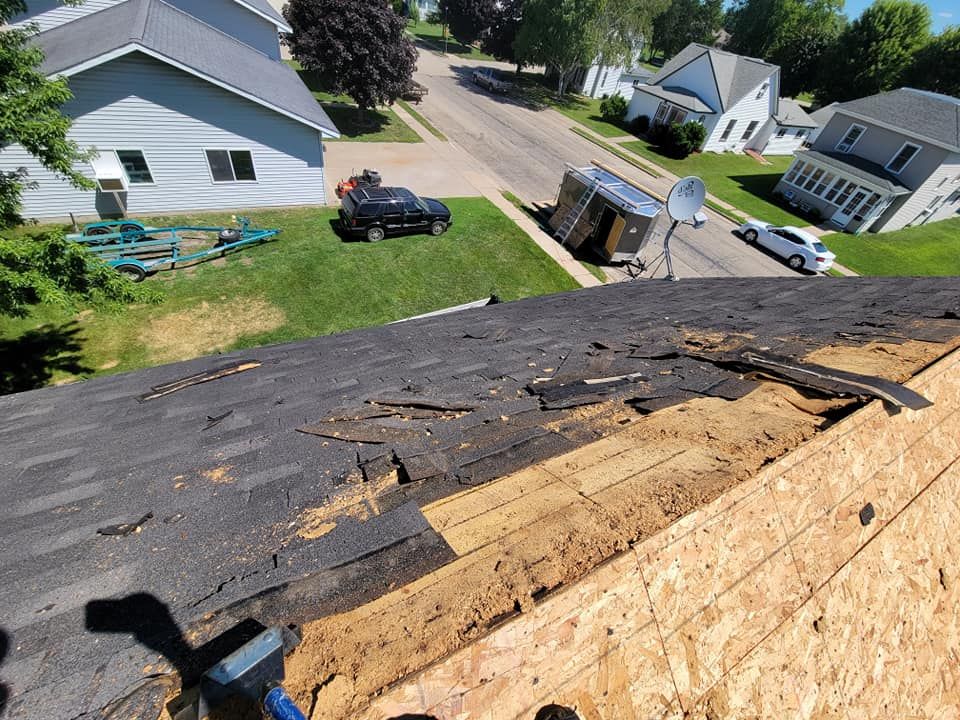
What Happens During an Emergency Call
When you contact Shinglers Roofing LLC for emergency service, the team prioritizes safety and quick stabilization. A technician arrives with tarps, fasteners, and temporary patching materials to cover the damaged area and stop active water intrusion. You receive an initial damage assessment that identifies the cause, the extent of the compromised area, and any hazards such as sagging decking or exposed wiring.
After the temporary protection is in place, you will notice that water is no longer entering the home and that loose shingles or debris have been secured or removed. The contractor discusses next steps, including permanent repair timelines, insurance documentation, and whether additional structural work is needed. You also receive photographs and written notes that support your claim and help you understand what the full repair will involve.
Emergency service focuses on stopping immediate damage, not completing full replacements. If the roof requires extensive work, the contractor schedules a follow-up visit once materials arrive and weather permits safe installation. Temporary coverings typically remain effective for several days to a few weeks, depending on conditions.
Urgent Roofing Questions Homeowners Ask
When a roof fails suddenly, homeowners need clear answers about response times, temporary solutions, and what comes next.
If your roof is actively leaking or damaged and you need immediate protection, contact Shinglers Roofing LLC to secure your home and begin the process of restoring your roofing system to full function.
How quickly can emergency roofing services respond?
Response times depend on weather conditions and crew availability, but most urgent calls in Potosi are addressed within a few hours to prevent further interior damage.
What does a temporary tarp actually protect?
A properly secured tarp stops rain from entering the damaged area, shields exposed sheathing from UV degradation, and prevents wind from lifting additional shingles until permanent repairs are completed.
When should you file an insurance claim after storm damage?
You should document the damage immediately, contact your insurer within twenty-four to forty-eight hours, and arrange for a contractor assessment to support your claim with photographs and measurements.
Why do some emergency repairs require follow-up work?
Initial stabilization addresses water entry, but permanent fixes often require dry conditions, replacement sheathing, and matching shingle materials that may need to be ordered.
What should you do while waiting for the emergency crew to arrive?
Move valuables away from the leak, place buckets under drips, and avoid standing water near electrical outlets or fixtures to reduce shock risk.